Post-hair transplant care · Chelsea, London
Post-Hair Transplant Care & Complication Assessment in London
If you have had a hair transplant in the UK or abroad and would like your recovery assessed, we provide doctor-led post-transplant consultations in London. This may include routine progress review or assessment of symptoms such as persistent redness, swelling, pain, folliculitis, suspected infection, donor-area problems or concerns about healing.Your transplant does not need to have been performed at Dr Vahe Clinic.
A £25 consultation deposit applies and is refundable or redeemable in line with the clinic's consultation policy.
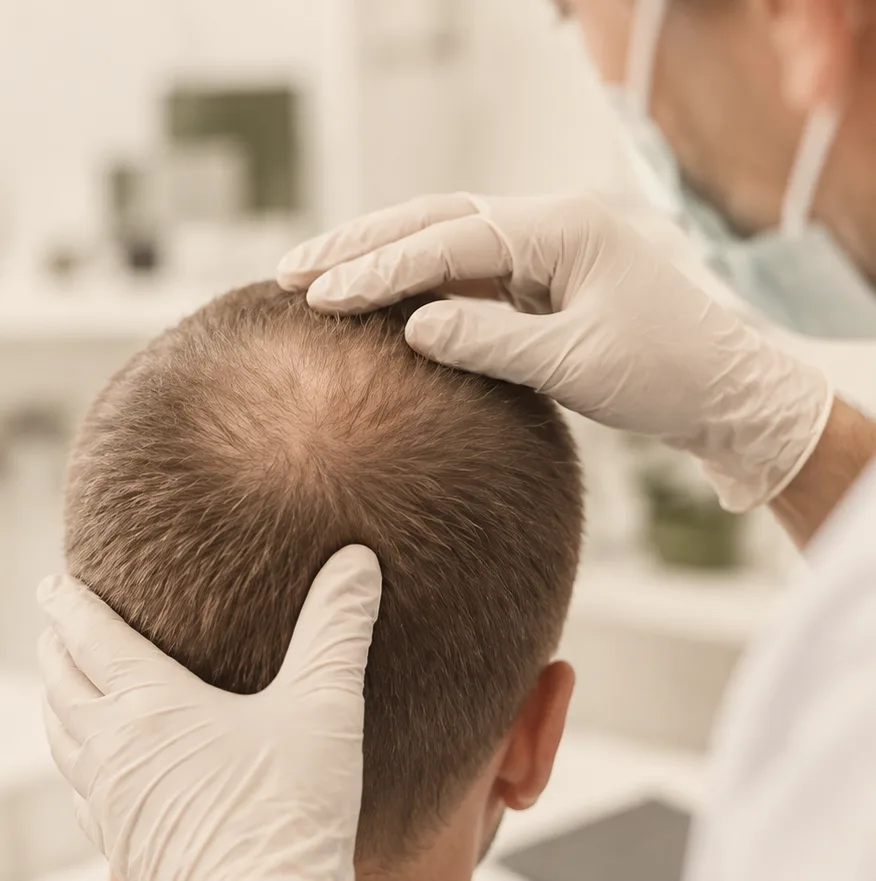
- Doctor-led assessment
- Surgery performed anywhere
- Independent medical opinion
- No treatment promised before examination
Who this assessment is for
Dr Vahe Clinic provides doctor-led post-hair transplant follow-up and complication assessment in Chelsea, London, for patients whose surgery was performed at another UK clinic, in Turkey or elsewhere abroad, as well as at the clinic itself.
You may request an appointment for a routine check of recovery and progress, for a second opinion, or for symptoms that may need medical evaluation — such as persistent redness, painful bumps, discharge, swelling, a suspected lost graft, donor-area pain or numbness, or hair that does not seem to be growing as expected.
What are you concerned about?
Choose a topic to jump to the relevant information below. This is for guidance only — it does not diagnose your symptoms.
Had your hair transplant abroad?
Yes, we can assess a transplant performed abroad. Patients may request an independent post-hair transplant assessment in London even when surgery took place overseas.
Many people travel internationally for hair transplantation, including to Turkey and elsewhere in Europe. Once home, it can be difficult to see the original surgical team for a physical examination.
Dr Vahe Clinic can provide an independent, in-person assessment in London if:
- You would like your recovery checked
- You have questions about healing
- You are unsure whether symptoms are expected
- You cannot easily return to the original clinic
- You have concerns about the donor or recipient area
- You would like an independent medical opinion
Where possible, it is usually helpful to keep your original clinic informed.
What is normal after a hair transplant?
Some redness, swelling, tenderness, crusting, itching and shedding can all be part of normal healing. Whether a symptom is expected depends on how long ago surgery was, how severe it is, and whether it is settling or getting worse — a symptom alone is not a diagnosis.
- Expected recovery
- Mild symptoms that follow the usual timeline and gradually improve.
- Possible complication
- Symptoms that persist, worsen or appear later than expected — worth a doctor-led assessment.
- Urgent red flag
- Rapidly spreading redness, fever, severe pain or other warning signs listed above — seek urgent care, not a routine appointment.
Recovery varies between people and techniques, and your operating surgeon's instructions should normally be followed. The outline below describes expected recovery in general terms; it is not a substitute for examination.
First few days
- Tenderness and mild discomfort in the donor and recipient areas are common.
- Swelling may develop, sometimes spreading to the forehead or around the eyes.
- Redness and early crusting or scabbing around the grafts are usual.
First 1–2 weeks
- Grafts are protected while they settle, following your surgeon's instructions.
- Washing is normally carried out exactly as your operating team advised.
- Crusts gradually soften and lift, and the donor area begins to heal.
- Symptoms that persist or worsen rather than settle may warrant assessment.
Following weeks
- Transplanted hairs often shed — this is commonly part of the normal cycle.
- Temporary shedding of surrounding native hair (shock loss) can occur.
- Redness may take time to settle, particularly on lighter skin.
- Itching and sensitivity can occur as the scalp heals.
Following months
- Early regrowth varies considerably between people and between areas.
- The cosmetic result cannot be judged in the first weeks or months.
- Hair continues to mature and thicken over many months.
Problems and complications we can assess
Most people recover from a hair transplant without significant problems. The information below explains concerns that patients commonly ask about, how they may differ from expected recovery, and when an assessment may be appropriate. It cannot diagnose your symptoms.
Infection
- What it is
- Infection after a hair transplant is uncommon, but it needs appropriate medical assessment whenever it is suspected.
- What you may notice
- Increasing redness, warmth, tenderness or swelling; discharge or pus; pain that worsens rather than settles; fever or feeling unwell.
- When assessment may be appropriate
- Promptly, if symptoms are worsening. Fever, spreading redness or feeling unwell should be treated as urgent.
Folliculitis
- What it is
- Inflammation of hair follicles, which may appear as the scalp heals and new hairs begin to grow through.
- What you may notice
- Small red bumps or pustules, tenderness or itching in the recipient or donor area.
- When assessment may be appropriate
- A few minor spots may settle on their own. Persistent, painful or widespread inflammation is worth having examined.
Swelling (oedema)
- What it is
- Some swelling of the scalp, forehead or face is an expected response to surgery in the first days.
- What you may notice
- Puffiness across the forehead or around the eyes, typically peaking a few days after surgery.
- When assessment may be appropriate
- If swelling is severe, persistent, one-sided, painful or getting worse instead of settling.
Pain
- What it is
- Tenderness is expected after surgery and usually eases progressively.
- What you may notice
- Soreness in the donor or recipient area, often more noticeable when lying down.
- When assessment may be appropriate
- If pain is significant, persistent or worsening. Severe or rapidly increasing pain needs urgent assessment.
Redness / persistent erythema
- What it is
- Redness can be part of normal healing and may take some weeks to fade.
- What you may notice
- Pink or red skin across the recipient area, sometimes more visible on fair skin.
- When assessment may be appropriate
- If redness is persistent, worsening, painful, warm or accompanied by other concerning symptoms.
Bleeding
- What it is
- Minor spotting can occur in the early period after surgery.
- What you may notice
- Small spots of blood on a pillow or dressing in the first days.
- When assessment may be appropriate
- If bleeding is significant, persistent, or does not stop with gentle pressure — this needs urgent attention.
Crusting and scabbing
- What it is
- Crusts form around grafts as part of normal healing and gradually lift over the first weeks.
- What you may notice
- Thick or persistent crusts, uncertainty about whether to remove them, or worry that grafts may come away with a crust.
- When assessment may be appropriate
- If crusts remain much longer than your surgeon described, or are associated with pain, discharge or redness. Do not pick or remove crusts, and follow your surgeon's washing protocol unless a clinician advises otherwise after examination.
Graft dislodgement and graft concerns
- What it is
- Patients often worry about losing a graft — after scratching, bumping the head or seeing a hair come out with a scab.
- What you may notice
- “Did I lose a graft?”, “Is this a graft or just a scab?”, a small spot of bleeding after a knock, or a hair attached to a crust.
- When assessment may be appropriate
- Timing after surgery and a physical examination matter. If you are concerned, an assessment can help clarify what has happened.
Shock loss and postoperative shedding
- What it is
- Transplanted hairs commonly shed in the weeks after surgery. Temporary shedding of surrounding native hair or donor-area hair can also occur.
- What you may notice
- Hair falling from the recipient area, or thinning around it, some weeks after surgery.
- When assessment may be appropriate
- Shedding does not automatically mean the transplant has failed. A review may help if shedding seems extensive or prolonged.
Poor or delayed growth
- What it is
- Growth after a transplant is gradual and variable, and depends on many factors.
- What you may notice
- Hair not yet growing, one side looking different, lower-than-expected density, or slower progress than anticipated.
- When assessment may be appropriate
- Timing, photographs over time, surgical technique, baseline hair and clinical examination all matter. Assessment cannot promise eventual growth.
Donor-area overharvesting or depletion
- What it is
- Concern that too many follicles have been removed from the donor area, or extracted unevenly.
- What you may notice
- A patchy, uneven or visibly thinned donor area, sometimes described as a moth-eaten appearance.
- When assessment may be appropriate
- Assessment may help distinguish an early postoperative appearance from persistent donor depletion.
Donor-area pain, numbness or sensitivity
- What it is
- Altered sensation in the scalp can occur after surgery and often improves over time.
- What you may notice
- Numbness, tingling, hypersensitivity or persistent discomfort in the donor or recipient area.
- When assessment may be appropriate
- If symptoms are persistent, worsening, or affecting daily life.
Scarring
- What it is
- All hair transplant techniques leave some form of scar, which varies with technique and individual healing.
- What you may notice
- FUE dot scars, an FUT (strip) scar, a widened or raised (hypertrophic) scar, or, in some people, keloid-type scarring.
- When assessment may be appropriate
- If a scar is more visible, raised, painful or itchy than expected, or is changing over time.
Cysts and bumps
- What it is
- Small bumps can have several causes, including inflamed follicles and, less commonly, cysts that form after surgery.
- What you may notice
- Persistent lumps or bumps in the recipient or donor area.
- When assessment may be appropriate
- Not every bump is a cyst — clinical examination is needed to tell the difference.
Skin necrosis / compromised healing
- What it is
- Uncommon, but potentially significant: an area of skin does not receive enough blood supply to heal normally.
- What you may notice
- Increasing severe pain, unusual colour change, dark or dusky areas, breakdown of the skin or delayed healing.
- When assessment may be appropriate
- These changes require prompt medical assessment — seek urgent care rather than waiting for a routine appointment.
Itching, dryness or dermatitis
- What it is
- Some itching and dryness is common as the scalp heals.
- What you may notice
- An itchy, dry, flaky or irritated scalp.
- When assessment may be appropriate
- If symptoms are persistent, severe, spreading or associated with a rash.
Pigment changes
- What it is
- Lightening (hypopigmentation) or darkening (hyperpigmentation) of the skin can occur, particularly in the donor area.
- What you may notice
- Pale dots or darker patches where follicles were extracted or grafts placed.
- When assessment may be appropriate
- If changes persist or are a cosmetic concern for you.
Wound problems after FUT / strip surgery
- What it is
- The linear wound from strip surgery needs time to heal and can occasionally separate or become inflamed.
- What you may notice
- Wound separation (dehiscence), persistent tenderness, scar concerns or signs of infection.
- When assessment may be appropriate
- Promptly if the wound opens, discharges or becomes increasingly painful or red.
Unnatural appearance or density concerns
- What it is
- Concerns about how the result looks, which should be assessed with postoperative timing in mind.
- What you may notice
- Hairline shape, asymmetry, density, hair direction or angulation, or visible donor depletion.
- When assessment may be appropriate
- A review can discuss your concerns, but final cosmetic assessment is usually only possible once growth has matured.
Continuing native hair loss
- What it is
- A hair transplant does not necessarily stop the progression of underlying hair loss around the transplanted areas.
- What you may notice
- Thinning behind or around transplanted hair, or a change in overall pattern over time.
- When assessment may be appropriate
- If you notice ongoing thinning — assessment of the underlying hair loss may be appropriate.
Post-hair transplant progress review
Not everyone has a complication. You can book a review simply to understand whether your recovery and progress appear appropriate for the time since surgery. A review may consider:
- Donor area
- Recipient area
- Scalp condition
- Healing
- Photographs over time
- Shedding and growth pattern
- Density concerns
- Scarring
- Symptoms
- Questions about ongoing care
A progress review cannot guarantee that the eventual cosmetic result can be predicted.
What happens at your appointment?
You will be seen by Dr Vahe Karimyan at the clinic in Chelsea. The appointment follows five steps.
History
The doctor asks about the date of your transplant, the country and clinic, the technique (FUE, FUT or DHI) and approximate graft number if known, your medications, the aftercare instructions you were given, and when and how any symptoms began and changed.
Examination
The recipient area, donor area and wider scalp are examined, including any wounds or scars, redness or swelling, follicles and the overall healing pattern.
Review of photographs and documents
Pre-transplant, immediate postoperative and progress photographs, an operative report, aftercare instructions and details of products or medications used are reviewed if available.
Clinical impression
The doctor explains what appears consistent with expected recovery and what may need further assessment or management.
Next steps
Depending on findings: reassurance and monitoring, aftercare advice, further investigation, treatment where clinically appropriate, referral, contacting your original surgical team, or urgent escalation where required. No treatment is promised before assessment.
What to bring, if available
- Pre-transplant photographs
- Immediate postoperative photographs
- Progress photographs
- Operative report, if available
- Current medication list
- Aftercare instructions from your clinic
- Details of products or medications used since surgery
Do not delay seeking medical assessment simply because these documents are unavailable.
Can we help if another clinic did the surgery?
Yes. If you are looking for an independent hair transplant check or second opinion in London, you may request an independent assessment even if your transplant was performed at another clinic in the UK or abroad. However:
- We cannot retrospectively supervise another clinic's surgery.
- We cannot guarantee or take responsibility for another provider's surgical outcome.
- Any treatment recommendation depends on examination.
- In some cases your original surgeon may remain the most appropriate person to contact.
- Emergencies require emergency services — call 999 or attend A&E.
If you are also concerned about ongoing hair thinning, a separate hair restoration consultation focuses on the underlying pattern of hair loss.
Frequently asked questions
Sources and further reading
- Hair transplant — NHS
- Before you have a cosmetic procedure — NHS
- Kerure AS, Patwardhan N. Complications in Hair Transplantation. J Cutan Aesthet Surg. 2018;11(4):182–189 — PubMed Central
Medically reviewed by Dr Vahe Karimyan. This page is general information and does not replace an individual medical assessment.
Concerned about your recovery?
Book an assessment at 25 Ives Street, Chelsea, London SW3 2ND — a short walk from South Kensington and Sloane Square stations — or speak to the team first if you are unsure whether an appointment is right for you.
A £25 deposit is required to secure your consultation. It is fully redeemable towards treatment. It is also refundable if treatment is not clinically suitable, if you attend your consultation and decide not to proceed, or if you cancel or rearrange with at least 24 hours' notice.
What happens after booking?
Communications vary between patients and appointments. Depending on your booking and contact preferences, you may receive:
Appointment confirmation
Written confirmation of the date and time you selected.
Directions to the clinic
Information to help you find the clinic and plan your journey.
Relevant pre-consultation information
Where applicable, background information to read before your appointment.
Reminder notifications
A reminder ahead of your appointment, depending on your contact preferences.
Arrival information
Guidance on when to arrive and what to expect on the day.
Visiting the clinic
- Clinic address
- Opening hours
Tuesday – Saturday
11:00 am – 6:30 pm
- Transport links
Nearest Underground stations
- South Kensington Station · District, Circle & Piccadilly lines
- Sloane Square Station · District & Circle lines
Nearby bus routes
14 · 19 · 49 · 360
- Parking
Pay-by-phone parking bays are available nearby.
- Nearest station
South Kensington Station
Our clinic
A considered clinical setting in Chelsea
Our Chelsea clinic is designed to provide a calm, private environment for consultations, assessment and treatment. Explore the reception, waiting areas and clinical rooms before your visit.
Related pages
- Hair restoration consultation — for ongoing thinning or pattern hair loss.
- About Dr Vahe Karimyan
- Contact the clinic, opening hours and directions — 25 Ives Street, near South Kensington and Sloane Square.
Speak to the clinic
If you would like to check whether an assessment is appropriate before booking, the team can answer general questions. For urgent symptoms, seek urgent medical care instead.
- Phone020 3370 3503
- Emailinfo@doctorvahe.com
Opening hours
- Monday
- Closed
- Tuesday
- 11:00 – 18:30
- Wednesday
- 11:00 – 18:30
- Thursday
- 11:00 – 18:30
- Friday
- 11:00 – 18:30
- Saturday
- 11:00 – 18:30
- Sunday
- Closed